
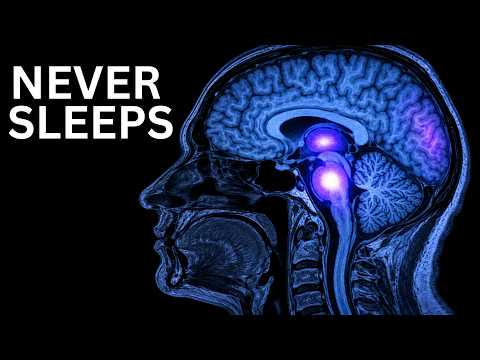
Video unavailable
This video can't be played right now.
Neuroscientists Still Don’t Know Why We Dream | The Sleepy Scientist
You can find The Sleepy Scientist on Spotify here: https://open.spotify.com/show/0340wK7zF0FYrtTZLWIfzC?si=0e01b008d90a4c6e Every night, your brain can build places that do not exist, bring back people you have not seen for years, create fears from nothing and convince you that impossible events are perfectly normal. In this slow exploration of dreaming, we look at what happens inside the sleeping brain, why rapid eye movement sleep became so important to dream research, why dreams disappear so quickly after waking, and whether they help process memories, emotions or possible threats. We also explore Sigmund Freud's ideas, activation synthesis, recurring dream themes, lucid dreaming, sleeping animals and the intriguing possibility that dreams may not have one single purpose at all. Science understands far more about dreaming than it once did, but the deeper question of why the sleeping brain creates conscious experiences remains surprisingly open. SOURCES: National Heart, Lung, and Blood Institute - Sleep Phases and Stages https://www.nhlbi.nih.gov/health/sleep/stages-of-sleep Eugene Aserinsky and Nathaniel Kleitman - Regularly Occurring Periods of Eye Motility, and Concomitant Phenomena, During Sleep https://pubmed.ncbi.nlm.nih.gov/13089671/ John Allan Hobson and Robert McCarley - The Brain as a Dream State Generator: An Activation-Synthesis Hypothesis of the Dream Process https://pubmed.ncbi.nlm.nih.gov/21570/ National Center for Complementary and Integrative Health - Mapping the Brain During Sleep Yields New Insights on Dreaming and Consciousness https://www.nccih.nih.gov/research/research-results/mapping-the-brain-during-sleep-yields-new-insights-on-dreaming-and-consciousness Erin Wamsley, Robert Stickgold and colleagues - Dreaming of a Learning Task Is Associated With Enhanced Sleep-Dependent Memory Consolidation https://pubmed.ncbi.nlm.nih.gov/20417102/ Erin Wamsley and Robert Stickgold - Dreaming of a Learning Task Is Associated With Enhanced Memory Consolidation: Replication in an Overnight Sleep Study https://pubmed.ncbi.nlm.nih.gov/30091247/ Karen Konkoly, Ken Paller and colleagues - Real-Time Dialogue Between Experimenters and Dreamers During Rapid Eye Movement Sleep https://pubmed.ncbi.nlm.nih.gov/33607035/ Erik Hoel - The Overfitted Brain: Dreams Evolved to Assist Generalization https://pubmed.ncbi.nlm.nih.gov/34036289/
Suggested videos
Why Does Jupiter Produce More Heat Than It Receives From the Sun?
The Sleepy Scientist · 2:37:36
The Sleepy Scientist | What Is Time, Really?
The Sleepy Scientist · 2:00:01
The Invisible Universe, Explained Slowly | The Sleepy Scientist
The Sleepy Scientist · 2:47:32

The Sleepy Scientist | Did "Nothing" Ever Exist?
The Sleepy Scientist · 2:13:37
How Matter Actually Works | The Sleepy Scientist
The Sleepy Scientist · 2:58:26
Why Time Is Not What It Seems | The Sleepy Scientist
The Sleepy Scientist · 2:34:08

Where Does Space Stop? | The Sleepy Scientist
The Sleepy Scientist · 3:25:11
How the Brain Creates the World You Experience | The Sleepy Scientist
The Sleepy Scientist · 2:47:51